
If you are ever fortunate enough to take a cruise ship from Southampton to Rio de Janeiro, you’ll find a few opportunities to photograph some interesting animals on the way. But crossing the Atlantic in January isn’t one of them. You would normally expect to leave the worst of winter behind you south of the Azores but no such luck on my trip as cold temperatures and choppy seas followed in our wake and there was nothing to see except empty ocean. In fact, on arriving in Port Canaveral, Florida (the Sunshine State), I had to dig out the winter coat, trousers and woolly ‘at, and still the wind on Cocoa beach sent shivers through my veins.
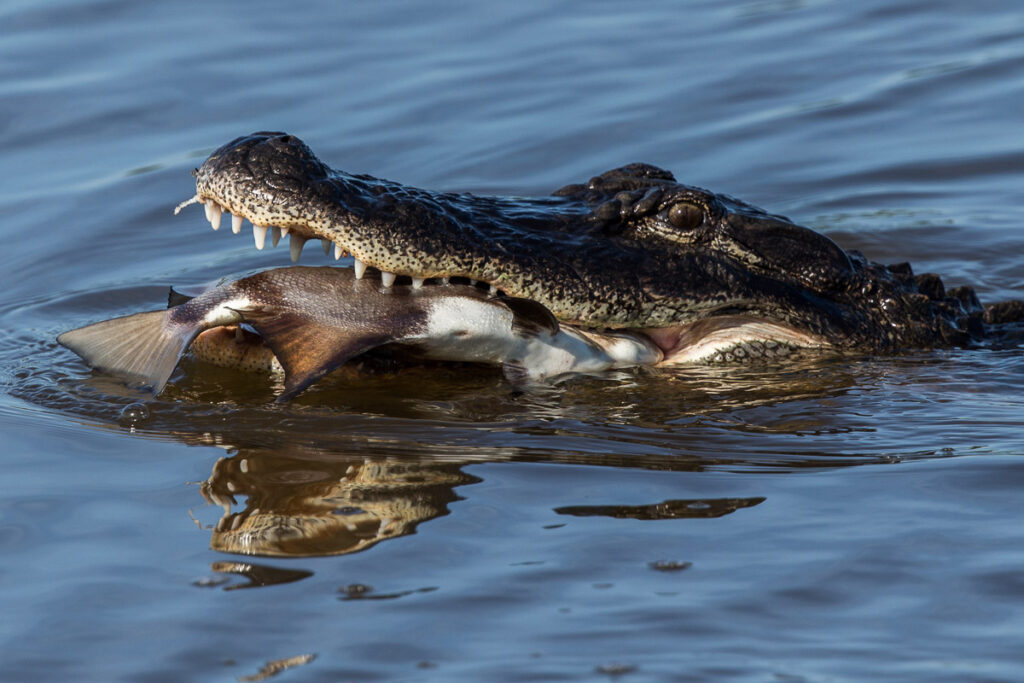
But the beach was where I spent a good couple of hours with gulls, black skimmers, ruddy turnstones, royal terns et al. I think it was even too cold for them because they were huddled together most of the time and very happy for me to lie close by and enjoy their company. Then I found a little boat trip through the mangroves which I had taken last time I was here. There were just seven of us on this pretty big boat so it was easy to move around and grab some decent shots of the brown pelicans, ospreys, anhingas, double-crested cormorants and great blue herons that call the bay, home. Waiting for the boat, I spent some time with a fisherman using tiny crabs to catch sheepshead fish. The last time I saw one of these was in the gaping mouth of an American alligator on Sanibel Island (the sheepshead, not the fisherman).
Leaving Florida, we set off through the western Atlantic and clipped the Caribbean, calling at Barbados where I snorkelled out from the beach to re-visit the ever-present hawksbill turtles, and Grand Turk, a tiny island which promised good bird life on the few town ponds but, largely, failed to deliver.
There were a couple of distant herons and ospreys about but the most interesting by far was an American kestrel feeding a lizard to its youngster on a telegraph pole.
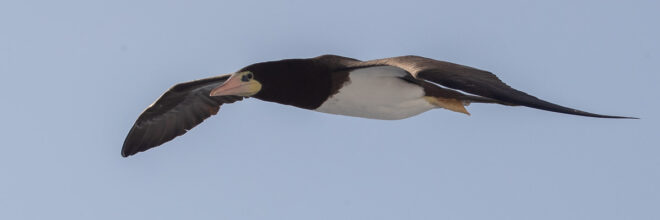
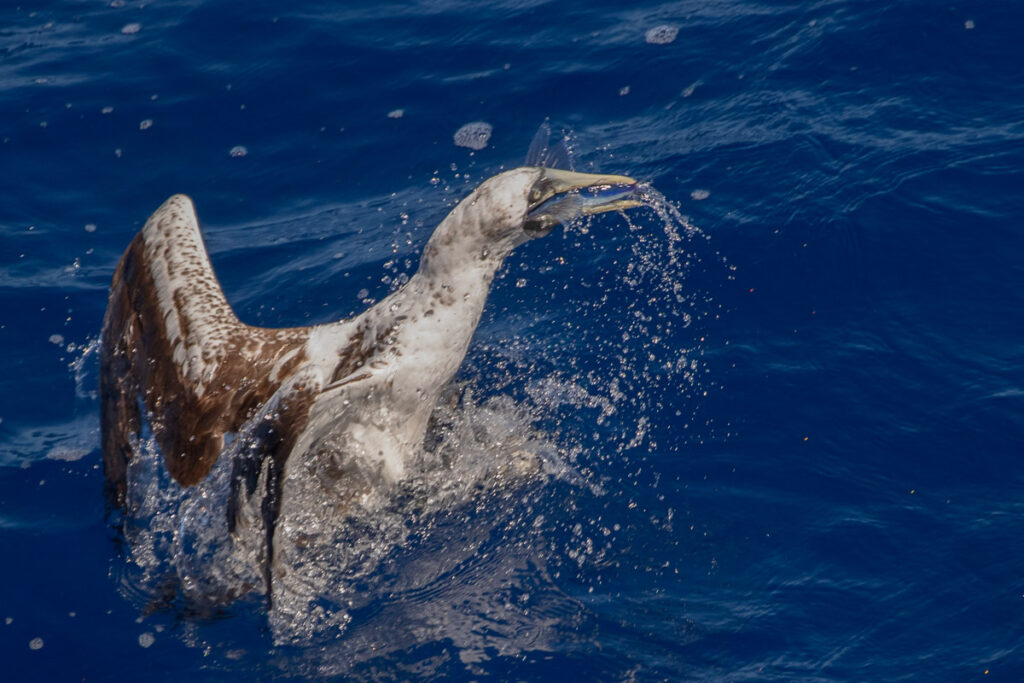
Steaming towards South America in tropical waters inevitably produces flying fish which leave the water to escape the ship by whipping their lower tail fins 50-60 times a second to generate the lift to get them airborne. Once out of the water, they extend their pectoral fins to glide across the surface. Where there are flying fish there’s a good chance of boobies making an appearance. Boobies, our gannets’ smaller cousins, come in different sizes. A pair of masked boobies were the first to join the ship, accompanied by just one red-footed, but it wasn’t long before there were many more.

Over the next few days, they were joined by the smaller brown boobies and between them they kept me amused for hours as they chased the fish and I followed with my camera. The boobies fly above and alongside watching for flying fish escaping the ship. When they appear, the chase is on with the boobies trying to catch the fish mid-air but perfectly happy to chase them into the water if needs must. This is all great for the boobies but, as in life generally, there’s always something or someone itching to spoil the fun. In this case, it is the magnificent frigate bird. This huge bird is much bigger than the boobies and has wings which are designed to allow it to soar high above. They patrol the skies with one objective – to relieve the smaller birds of their catch – and to do so without getting their feet wet. The frigate bird achieves this by harassing the booby until it regurgitates a whole fish, thereby allowing the frigate bird to take it mid air, the perfect example of a kleptoparasite. Job done – unless of course, there is another frigate bird waiting in the wings to try and take it from the first.
All this is great fun to watch but a bit of a challenge to photograph as there is much fast twisting, turning and diving while the ship proceeds at 15-20 knots! Then there is the tricky question of exposure. The sunlight is very strong, masked boobies are mostly white while brown boobies and frigate birds have more brown. Shooting against the sky requires a different exposure to shooting against the sea so, not only do you have to constantly change exposure compensation to deal with highlights and background, but you have to remember which settings you have at any given time and be prepared to make rapid changes. Inevitably, there will be a few mistakes…
Buzios, just north of Rio de Janeiro is a lovely little coastal town with some wonderful beaches and, thanks to a local fisherman who was gutting fish and tossing the waste into the water, a few picture opportunities of black-backed gulls and black vultures picking at the scraps in the surf.
An unexpected surprise was waiting on our early morning arrival into Rio because the bay was being patrolled by at least a dozen frigate birds. A couple of fishing boats with their nets out attracted the frigates, egrets, herons and gulls, all eager to plunder what they could from the captive fish.
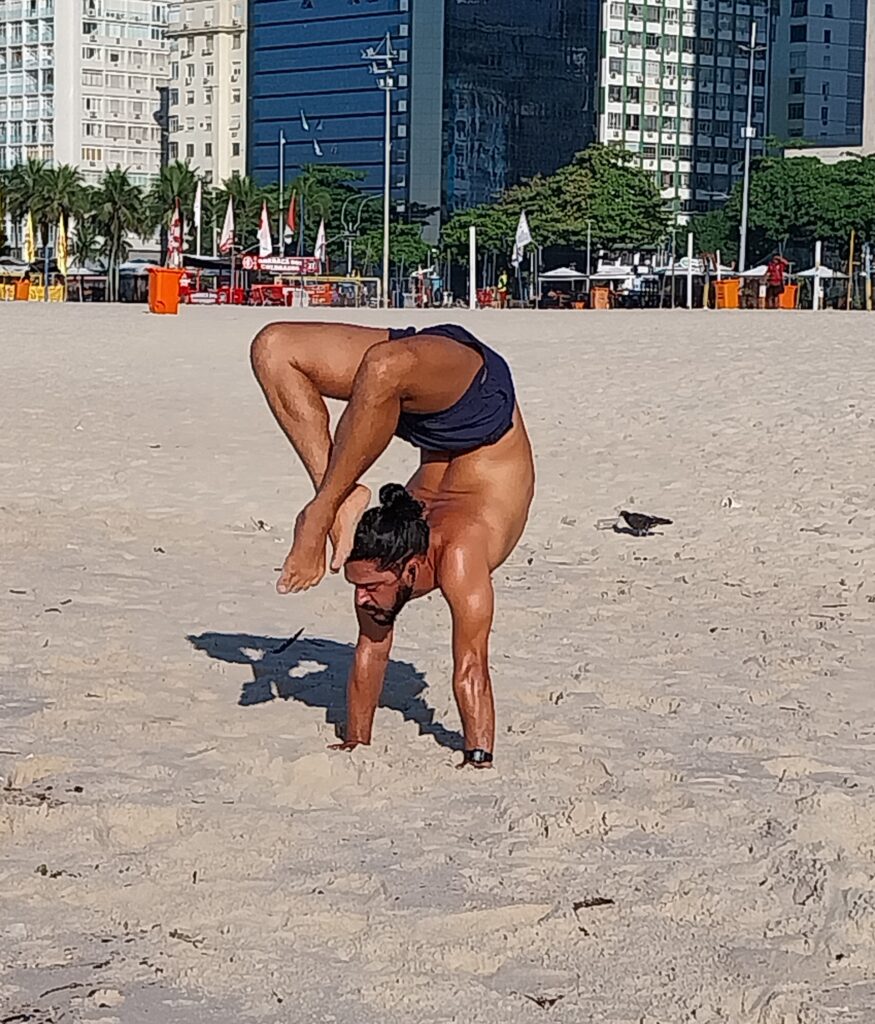
Rio is a pretty amazing place to visit with its weather, beaches and tourist hot spots and we had a couple of days to enjoy our stay. Just off Copacabana beach, there were a few frigate birds and feeding brown boobies, while on the beach there were hundreds of brown boobies in all shapes and sizes. Naturally, I avoided photographing any of these as it would have been totally inappropriate but I couldn’t resist a covert shot with my phone of a young man performing an impossible yoga position before completing his regime with even more extreme, ridiculous positions.
But all good things come to an end and as I write this, I’m sitting on a KLM plane flying back to February in the UK and the joys of the back end of winter. Certainly there will be no boobies displaying here…much too cold.
This Post Has 0 Comments